
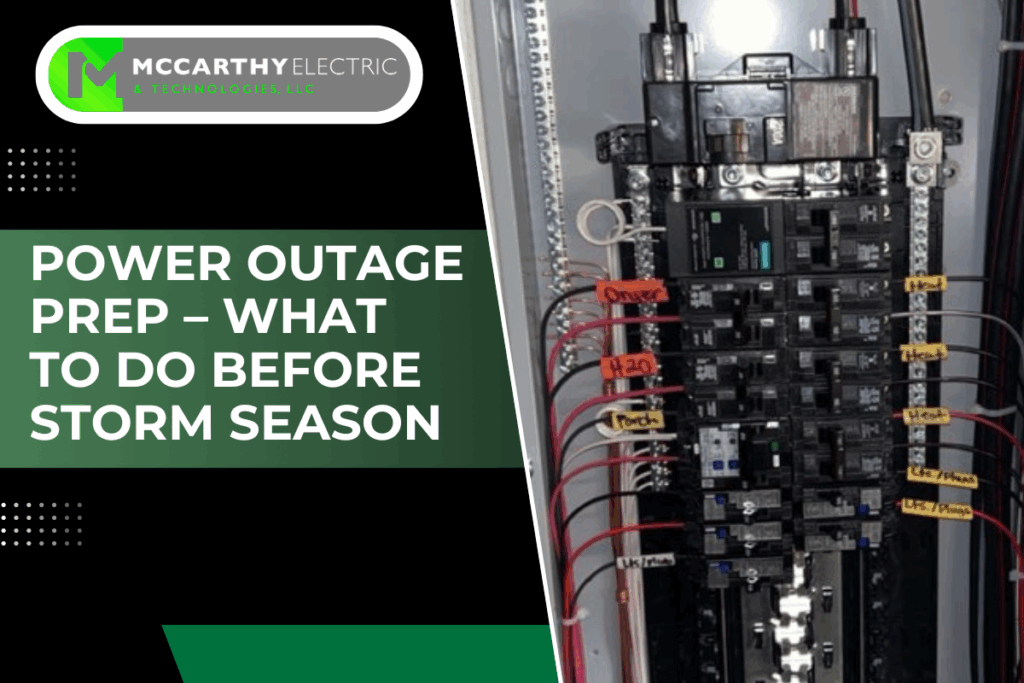
Storm season is coming—will your home stay powered?
Western Washington homeowners know the drill: fallen trees, downed lines, and hours, sometimes days, without electricity. However, with the proper electrical preparation, you can stay safe, warm, and connected, no matter what the forecast throws your way.
At McCarthy Electric, we’ve honed our expertise by helping hundreds of local families prepare for outages with practical solutions and expert electrical upgrades. In this blog, you’ll learn five innovative ways to prep your home before the next big storm, so you don’t have to panic when the lights go out.
Why Power Outages Are Common in Fall & Winter (WA Edition)
From heavy winds to snow-packed trees, Western Washington’s storm season creates a perfect storm for blackouts. Let’s break down why:
- Strong Winds & Falling Trees: Snohomish and King counties often experience wind gusts over 40–60 mph in fall storms. Trees topple, branches snap, and power lines suffer the consequences.
- Snow & Ice Accumulation: Ice storms may be rare, but when they hit, they wreak havoc. Snow-laden limbs take down overhead lines, especially in residential neighborhoods.
- Aging Infrastructure: Washington’s power grid, much like the rest of the country’s, includes decades-old equipment. That means it’s more vulnerable to failure when demand spikes or the weather turns ugly.
- Local Utility Stats: Puget Sound Energy and Snohomish County PUD report thousands of storm-related outages each year. In 2022 alone, some neighborhoods experienced multiple outages, each lasting between 12 and 48 hours.
Remember, you can’t control the weather, but you can control how well your electrical system stands up to it. Taking a proactive approach to storm preparedness can give you a sense of empowerment and control.
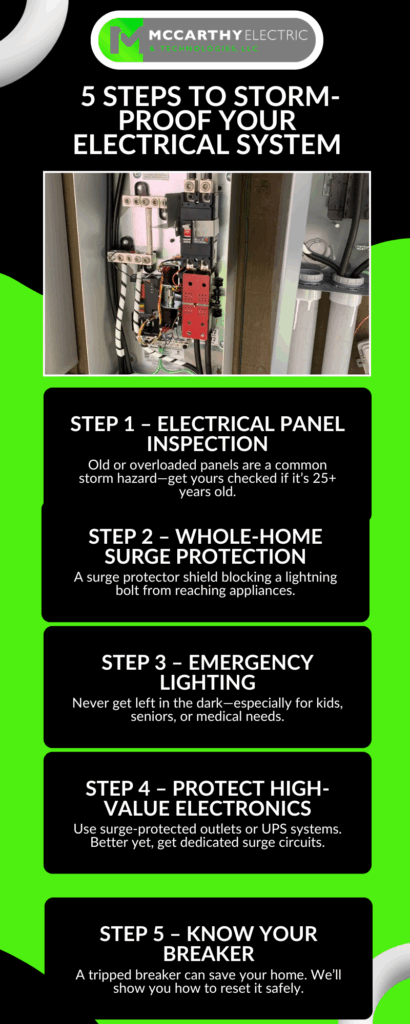
5 Steps to Prep Your Electrical System for Storms
Ready to storm-proof your home? Start with these essential electrical upgrades and checks.
1. Have Your Electrical Panel Inspected
Old or overloaded panels are a common cause of dangerous failures during storms. If your panel is more than 25 years old—or you’ve added EV chargers, HVAC systems, or hot tubs—it’s time to get a professional inspection.
2. Install Whole-Home Surge Protection
When power flickers on and off, it can send surges through your system. These surges damage sensitive electronics and can even start fires. A whole-home surge protector installed at your panel acts like a security guard for your devices.
3. Add Emergency Lighting
Battery-powered LED fixtures or professionally installed emergency lights ensure you’re never left in the dark—especially important for households with kids, elderly residents, or those with medical needs.
4. Protect High-Value Electronics
At a minimum, plug computers, TVs, and medical equipment into surge-protected outlets or battery backups (UPS systems). Better yet, have a licensed electrician install dedicated surge-protected circuits.
5. Know Where Your Breaker Is—and How to Use It
A tripped breaker during a storm might save your home from severe damage. However, if you don’t know how to reset it safely, you risk shock or worse. McCarthy Electric’s team can walk you through a breaker orientation during any service call.
Do You Need a Backup Generator?
The best time to install a generator is before the next storm is expected to hit.
Types of Generators
- Portable Generators: These are affordable and flexible, but they require manual operation, fuel storage, and are limited in power output. Standby Generators: These automatically restore power within seconds of an outage. They are ideal for whole-home coverage and long-term reliability.
- Standby Generators: Automatically restore power within seconds of an outage. These are ideal for whole-home coverage and long-term reliability.
Backup Generator Installation Services
Who Should Consider One?
- Families with small children or elderly residents
- Households with home medical equipment
- People working from home who depend on uninterrupted Wi-Fi
- Homeowners in rural areas or places with frequent outages
Utility & Tax Incentives
Some local utilities and federal programs offer rebates or tax credits for energy resilience upgrades. Ask us about available options when you book your free estimate.
FAQs About Power Outage Readiness
What size generator do I need?
That depends on what you want to power. A portable unit may handle essentials like your fridge and a few lights, while a standby generator can run your entire home. We perform load calculations to match you with the right system.
How often should I test my generator?
For standby units, run them once a month for 15–30 minutes. Most models have automatic self-testing modes, but manual testing is still smart before a significant storm.
How long does installation take?
Most installations take 1–2 days to complete, provided the necessary permits and inspections are in order. McCarthy Electric handles the permitting process and load calculations on your behalf.
Book Your FREE Quote Before the Next Storm Hits!
Don’t wait until the power goes out to realize you weren’t ready. McCarthy Electric offers:
- Free estimates
- Same-day service calls
- Certified technicians trained in Tesla, Generac, and SPAN systems
- Guaranteed code-compliant work
We’ve helped homeowners across Lynnwood, Lake Stevens, Everett, and Marysville weather the storm—and we’re ready to help you too.
Conclusion: Stay Powered and Safe
Power outages don’t have to mean panic. With a few smart upgrades and the expert help from McCarthy Electric, you can protect your home, your comfort, and your peace of mind. Our team is here to guide you every step of the way, providing you with a sense of security and assurance.
Book a FREE generator estimate today and take charge of your home’s storm readiness.
FAQs
How do I know if I need a panel upgrade before winter?
If your lights flicker or breakers trip during high usage, it’s time for an inspection. Older homes in Western WA often need upgrades to handle today’s loads.
Will a generator power my heat and AC?
Yes. With the right size and setup. Whole-home standby generators can handle heating systems, including electric wall heaters and heat pumps, providing reliable backup power for your entire home.
Can I finance a generator installation?
Yes! Ask our team about flexible financing options. We partner with trusted vendors and can help you find a plan that fits your budget.