
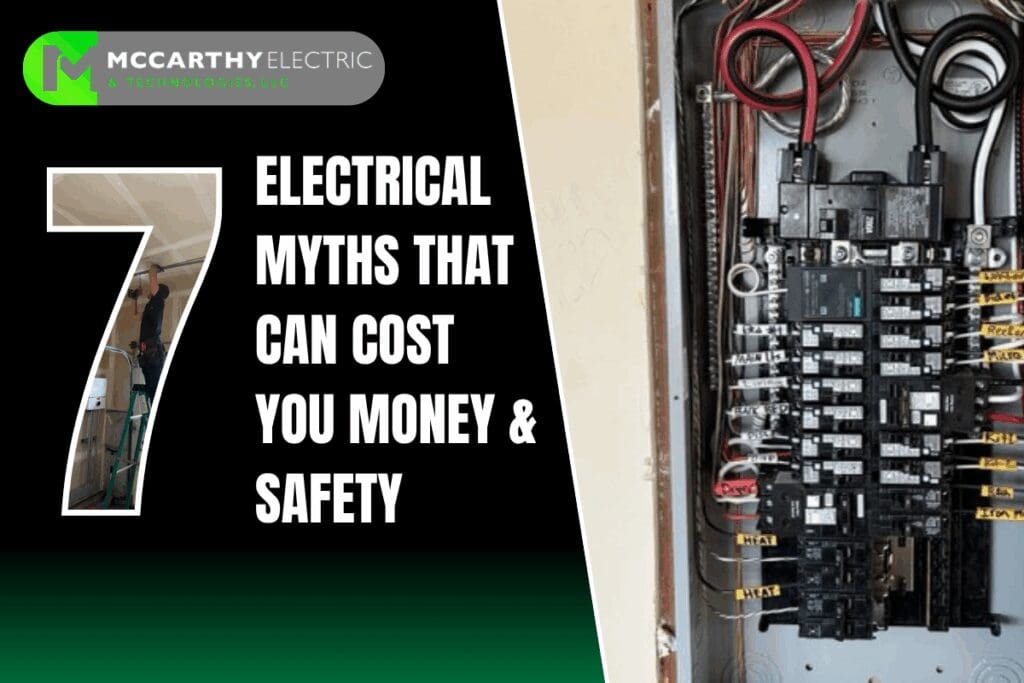
Heard you can fix wiring with a YouTube video. Let’s talk.
When it comes to your home’s electrical system, bad advice spreads fast. Search online or ask a neighbor, and you’ll hear tips that sound simple enough—until they put your family and property at risk, potentially leading to costly repairs and compromising your family’s safety.
At McCarthy Electric and Technologies, we’ve seen firsthand how electrical myths lead to costly mistakes. From homeowners who left extension cords buried under carpets to DIY projects that sparked small fires, these misconceptions can cost thousands in repairs and compromise your family’s safety.
Let’s separate fact from fiction with the seven most common electrical safety myths we uncover in homes across Lynnwood, Lake Stevens, and nearby communities.
Myth #1: You split a second off Without Turning Off the Breaker? Think again!
It only takes a split second of contact with a live wire to cause a severe shock. Many homeowners believe they can safely swap outlets without shutting off power if they’re “careful.” In reality:
- Standard outlets carry 120 volts of electricity, enough to cause injury or worse.
- Even if you avoid a shock, a loose connection made under live conditions can overheat later and start a fire.
The truth: Always shut off the breaker and confirm the power is off before touching wiring. Better yet, leave outlet replacement to a licensed electrician who knows how to secure connections properly.
Myth #2: It’s Fine to Use Extension Cords Permanently
Extension cords are designed as temporary solutions, not permanent wiring. Leaving them under rugs or stapled along baseboards creates serious hazards:
- Worn insulation from foot traffic can expose live wires.
- Overloaded cords can overheat, sparking hidden fires.
- Extension cords don’t have the same protection as fixed wiring inside walls.
The truth: If you need more outlets, have them installed by a professional. It’s a small investment compared to the cost of fire damage or injury.
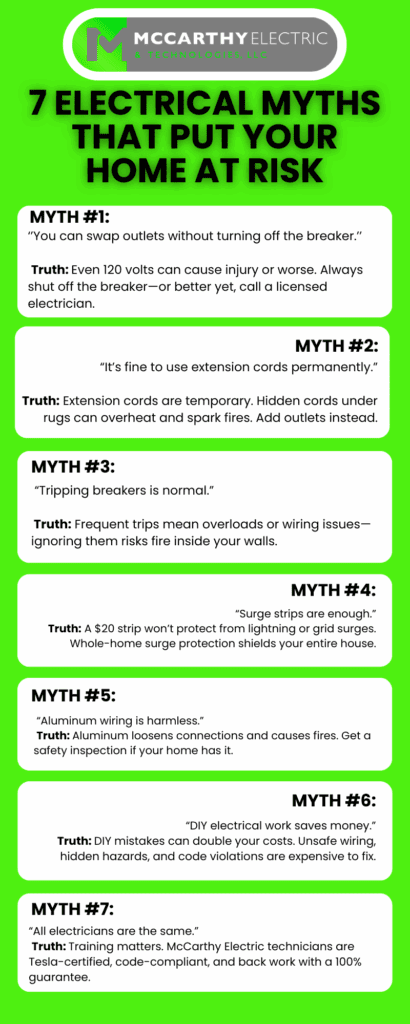
Myth #3: Tripping Breakers Are Normal
Some homeowners think breakers trip “just because.” In reality, breakers are your home’s first line of defense against overloaded circuits and dangerous faults.
- Frequent trips signal real issues—such as undersized wiring, overloaded appliances, or hidden shorts.
- Ignoring repeated trips can lead to melted wiring or fire inside your walls.
The truth: If your breaker keeps tripping, don’t reset and forget it. Call an electrician for a professional diagnosis to prevent bigger problems.
Myth #4: Surge Strips Are Enough
A $20 surge strip at the hardware store does not protect your entire home. These strips only handle minor fluctuations, not significant surges caused by lightning strikes or power grid issues.
- Sensitive electronics, such as EV chargers, appliances, and smart panels, can be destroyed by a single surge.
- Whole-home surge protection, installed at your electrical panel, offers proper protection.
The truth: Surge strips are a layer of convenience, not comprehensive protection. For long-term safety, ask about whole-home surge suppressors.
Myth #5: Aluminum Wiring Is Harmless
Homes built in the 1960s and 70s often used aluminum wiring. Many homeowners assume it’s fine because “it’s been there for decades.” The reality is different:
- Aluminum expands and contracts more than copper, which can cause connections to loosen.
- Loose connections create heat, which can start fires behind outlets and switches.
- Insurance companies may even deny claims if they determine that outdated aluminum wiring was the cause of the damage.
The truth: If your home has aluminum wiring, schedule a safety inspection. An electrician can recommend safe upgrades and repairs.
Myth #6: DIY Work Saves Time & Money
DIY might seem cheaper, but electrical mistakes are often among the most expensive to fix. Common issues we see after DIY projects include:
- Incorrect wire sizing that overheats.
- Improper grounding leaves appliances unsafe.
- Hidden junction boxes buried behind drywall that violate code.
One Lynnwood homeowner recently shared:
“We thought we could handle a small wiring job ourselves. When McCarthy Electric inspected our system, they found a hidden hazard that could have caused a fire. Their team saved us thousands in potential damage.”
The truth is, DIY can double your costs when an electrician has to undo unsafe work. Professional service ensures safety, efficiency, and compliance with code, giving you the peace of mind that your home’s electrical system is in good hands.
Myth #7: All Electricians Are the Same
Not all electricians bring the same level of training, certifications, or guarantees. Choosing the cheapest option can leave you with:
- Work that doesn’t meet local codes.
- Shortcuts that cost more in the long run.
- Delayed response times when emergencies happen.
At McCarthy Electric, our technicians are not just electricians; they are Tesla-certified, trained in advanced load calculations, and backed by a 100% quality guarantee. You can trust us to do the job right the first time, giving you peace of mind about your home’s electrical safety.
Want to avoid costly mistakes? Book a professional inspection today.
Your home’s electrical system is too important to leave to guesswork or myths. Whether you’re dealing with tripping breakers, outdated wiring, or planning a remodel, our team is here to protect your investment and your family. Don’t hesitate to book a professional inspection today.
Call 425-877-5572 or schedule your home safety check today.
FAQs: Electrical Myths and Safety
How can I tell if my home’s wiring is outdated?
Look for frequent breaker trips, warm outlets, flickering lights, or aluminum wiring. A licensed electrician can confirm with a professional inspection.
Do surge protectors really make a difference?
Yes, but strip protectors only handle minor surges. Whole-home surge protection offers the best defense for your appliances and electronics.
Why hire a certified electrician instead of a handyperson?
Certified electricians are licensed, trained, and insured to meet state and local codes. They provide safer, longer-lasting solutions than unlicensed alternatives.